The Correct Working Height in the OR: Why the Height Adjustment of the Operating Table Has More Influence Than Many Think
Different patients, diverse challenges, and various surgical situations… In between, the constant reminder: “Shoulders relaxed, stand straight, and maintain an upright posture” – anyone who operates daily knows that this is much easier said than done.
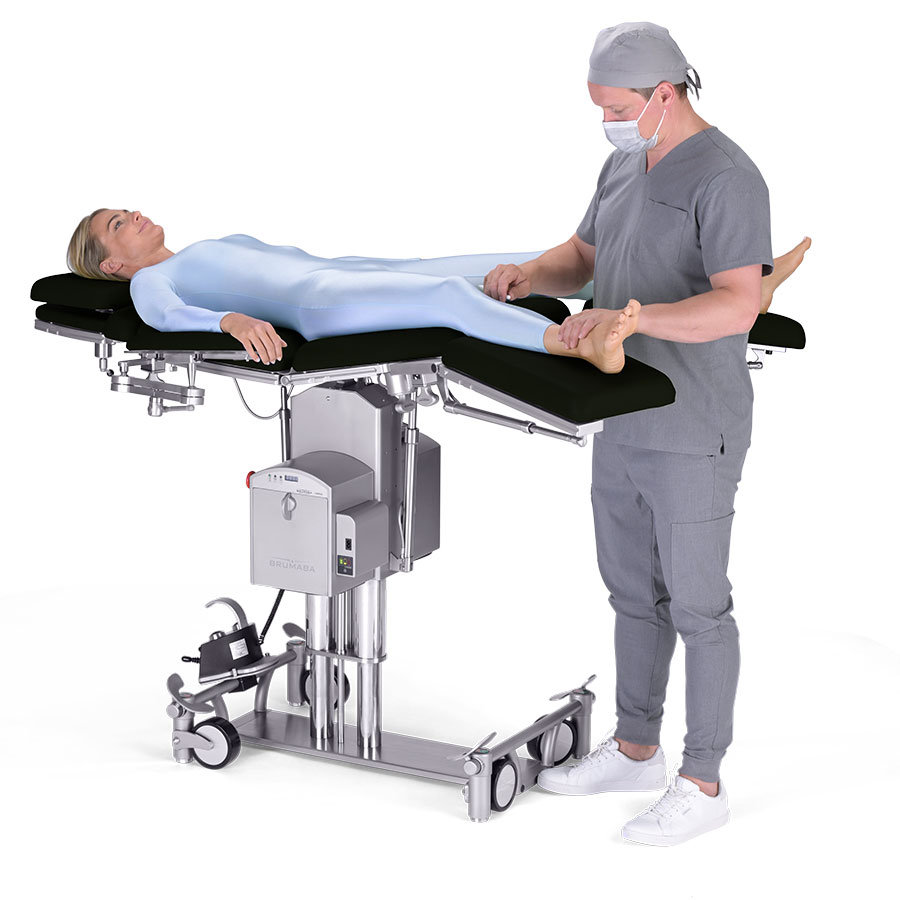
A major factor often underestimated in daily OR routine, yet crucial for comfort, precision, and ergonomics: the height of the operating table.
Because even the best surgical technique reaches its limits if the working position is incorrect.
One centimeter can make all the difference
Surgeons certainly have their own preferred working methods. Nevertheless, the principle applies: “Fit-to-Surgeon” – the surgical field must adapt to the person, not the other way around. And this is precisely where working height plays a decisive role.
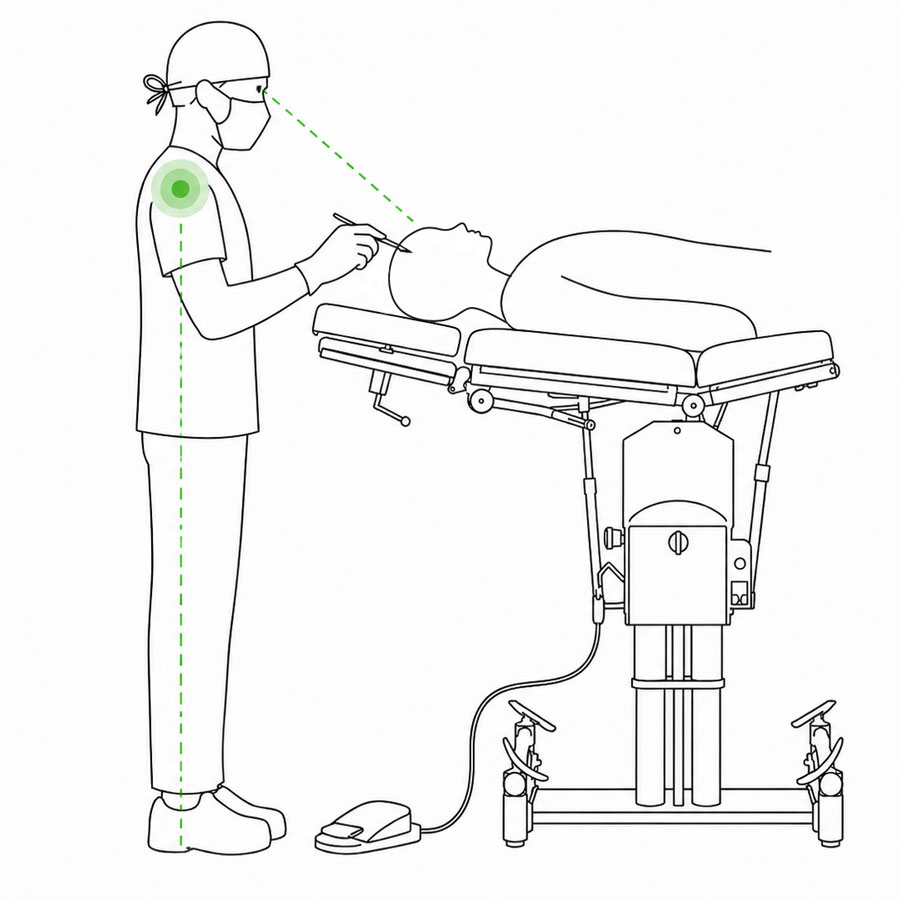
If patients are positioned too high, the OR team’s shoulders are unconsciously raised. This results in tense neck and shoulder muscles and increased strain on the arms. If the table is too low, surgeons automatically lean forward, straining their back and spine for hours. These correlations have already been described in several ergonomic studies. Even small deviations from the optimal working height can significantly increase muscle activity.
Every person is different – and so are surgeons. The operating table should take this into account.
In many facilities, several surgeons work at the same operating station. Their body sizes and working habits can differ considerably. A fixed working height can hardly meet these requirements.
Modern operating tables should therefore offer a large, stepless height adjustment range so that the patient’s position can be individually adapted to the treating person.
This is precisely one of the greatest advantages of the electric height adjustment of BRUMABA operating tables: the operating table adapts to the person, not the other way around.
Different procedures require different heights
The optimal working height depends not only on body size but also on the specific procedure. In clinics, for example, the same operating table is often used for various specialties and surgical fields.
Microscopic or particularly precise operations therefore require a different position than procedures involving greater force or changing access points. Furthermore, requirements can even change during an operation.
Ergonomics only works if it can be implemented easily in daily practice. Height adjustment is standard on many operating tables. However, what is crucial is how easily and quickly it can be used in daily OR routine. With BRUMABA, adjustment is so intuitive that the optimal working height is not only theoretically possible but also consistently utilized.
Less Strain. More Concentration.
Strain in the OR rarely results from a single awkward movement. Much more problematic are static postures maintained for extended periods or repeated daily, over and over again.
When the working height is correct, shoulders can remain relaxed, arms can work closer to the body, and the back can stay in a more natural, upright position. This reduces physical strain and helps maintain concentration even during longer procedures.
Especially in specialties such as ophthalmology, ENT, oral and maxillofacial surgery, aesthetic surgery, or dermatology, where millimeter precision is required, an optimal working height can make a noticeable difference in daily work and the quality of the final result.
Why electric height adjustment is indispensable today
Good height adjustment means more than just “up” and “down”.
In daily OR routine, the following are particularly important:
- a large, stepless adjustment range for different body sizes
- quick adjustments during the procedure
- safe operation under sterile conditions
- reproducible positions through memory functions
- high stability in every position
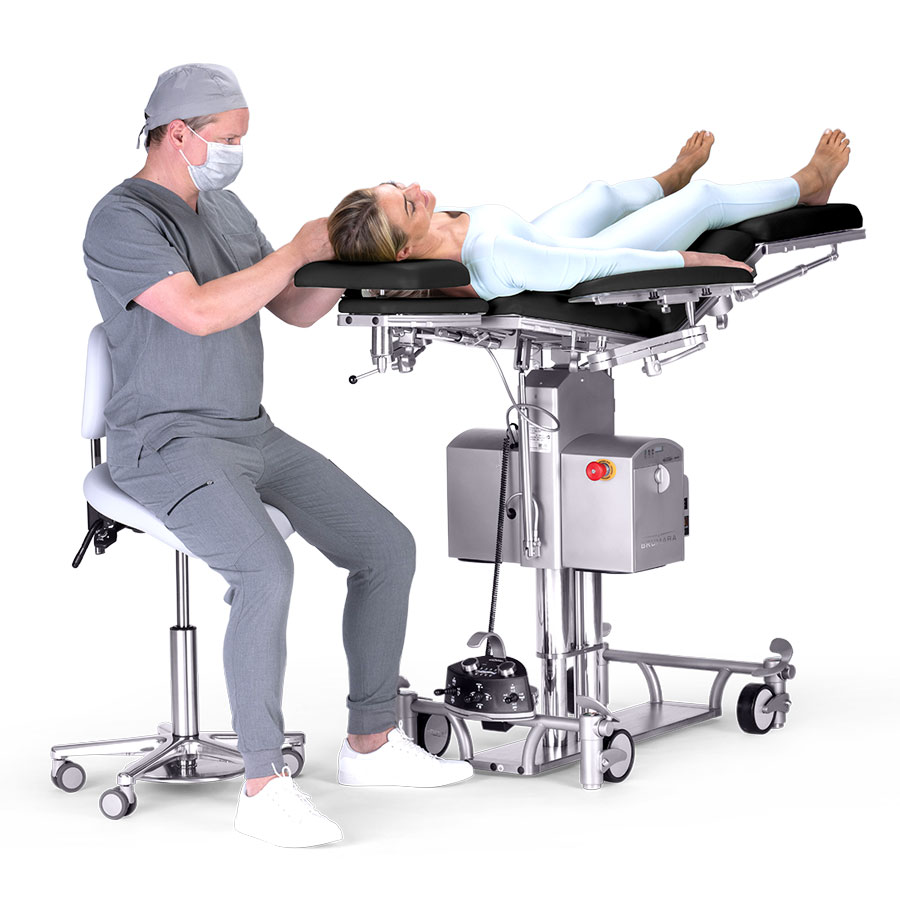
Only the interplay of these features ensures that the height adjustment of an operating table can actually be used in daily OR routine and unfold its ergonomic benefits.
Conclusion: The right height creates the foundation for good surgery
Ergonomics begins not with the surgeon, but with the workstation. The correct patient height enables more relaxed work, reduces physical strain, and creates the conditions for precise procedures.
Therefore, flexible height adjustment is one of the most important functions of a modern operating table. It ensures that the workstation adapts to the people who perform at their best every day.