For Every Position – an Overview of Operating Tables and Positioning Options
Medical studies have shown that optimal patient positioning in the OR can lead to a significant reduction in complications. For example, pressure damage caused by overlying tissue is reduced, postoperative limb pain is reduced, and the increased risk of injury due to the absence of protective reflexes under anesthesia is largely contained.
In this context, it is worth taking a look at the treating specialists. Incorrect patient positioning not only threatens complications for the patient, but the surgical field can also be difficult to reach. As a result, surgeons and OR assistants have to work under severe physical strain. This should be prevented at all costs.

Thanks to state-of-the-art technology and ergonomic settings, BRUMABA operating tables enable perfect and ergonomic patient positioning, which also enables the treating specialists to work in a posture-friendly manner. Read here to find out which positioning options these operating tables offer, what makes the models special and why BRUMABA is worthwhile.
What Positioning Options Do Operating Tables Offer?
Depending on the type and scope of the treatment, it is essential to be able to bring the patient into specified positions. With the BRUMABA operating tables, you are not only relying on sophisticated technology and multifunctional adjustability, but also benefiting from easy access to the patient or the surgical field. In particular, the following positioning options and surgical procedures can be easily covered with the operating tables from BRUMABA and the sophisticated accessories:

Entry position
It depends on individual cases how mobile the patients are on the operating table before treatment. Thanks to various entry positions, the patients can be optimally positioned without physical exertion for the patient or staff – the sophisticated technology of the BRUMABA operating tables makes a variety of suitable positions possible without great effort.
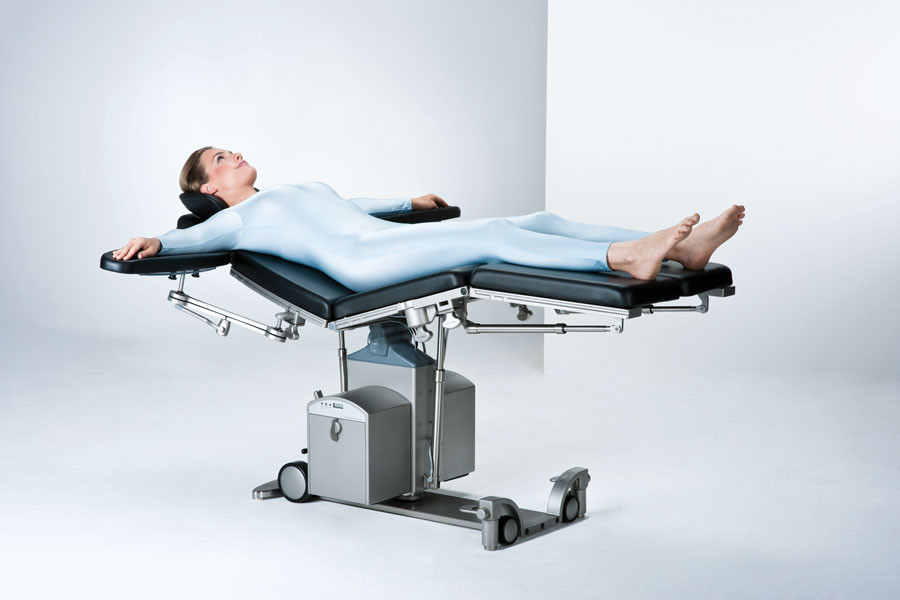
Flat Position
In the flat position, the patients lie flat on their backs, which is essential in some situations. However, we advise you to use the functionality of a BRUMABA operating table to bring the patient into the most ergonomic position possible. This has the following advantages:
- The patient’s weight is distributed over the entire body and storage damage is greatly reduced.
- The patient’s circulation remains better intact, which significantly shortens the time in the recovery room.
- The patient can breathe better. Especially in asthmatics or overweight patients, a stepped position achieves considerable well-being for the patient.
Step position
A variation of the supine position is the stepped position, in which the patient’s thighs are raised at right angles to the back. This creates muscle relief in the area of the lumbar spine. This comfortable positioning option is not only supported by BRUMABA operating tables, but can also be extended by integrated armrests, folding push handles and backrest extensions for length adjustment.
Trendelenburg position
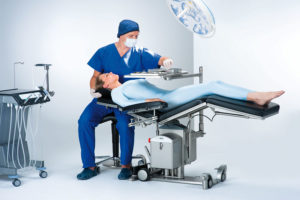
The Trendelenburg position is a classic patient position in the supine position. The head is positioned so that it occupies the lowest position in the body. This is achieved by inclining the operating table by 15-30°. This intentionally leads to an increased venous return. The possibility of the Trendelenburg position should also not be missing in urological and gynecological operations. The position is very important as an emergency measure for shock conditions and orthostatic collapse.
Inverted or anti-Trendelenburg Position
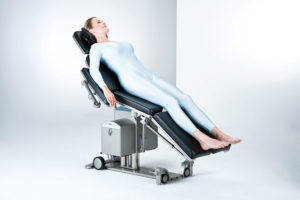
The opposite is the inverted Trendelenburg position or anti-Trendelenburg position. Here, the head occupies the highest position in the body, while the supine position is maintained. This is not only necessary for various operations in the area of the liver and diaphragm, but also for intubations and pneumonia or aspiration prophylaxis. Here, too, the technical solutions of the BRUMABA operating tables offer various individual configurations that enable smooth and precise work.
Prone position
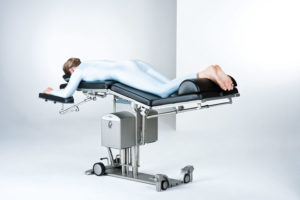
The opposite is the prone position, which can be used for procedures on the spine, back, os sacrum, in ARDS (Acute Respiratory Distress Syndrome) and in ventilation disorders. The patients lie on the ventral side of the body, which is why the support of the forehead and lower jaw is essential. The optimal height plays an important role, which is why the BRUMABA operating tables can be individually adjusted with a foot switch – the hands naturally remain sterile.
Lateral position
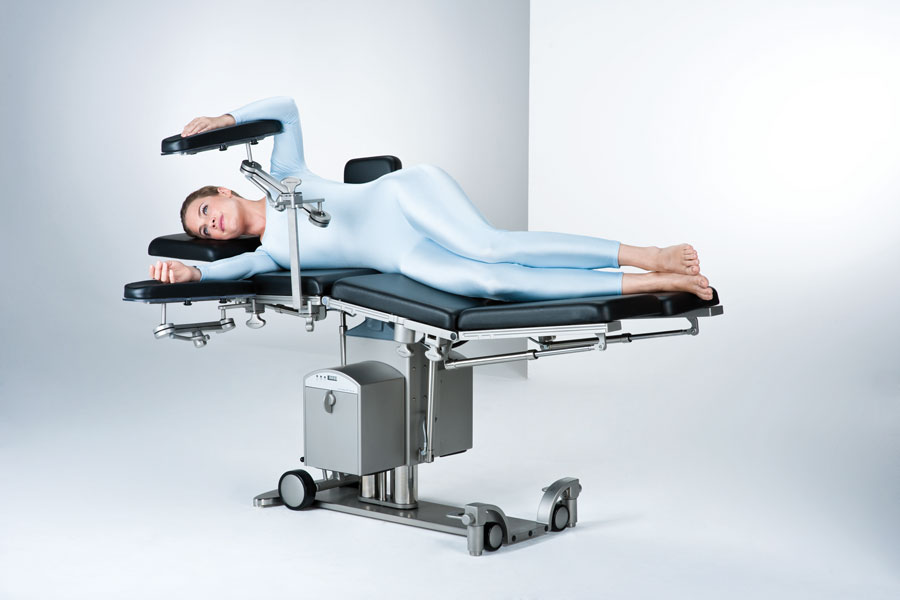
The term “lateral position” or (stable) “lateral position” describes a position in which the patients are positioned either on the left or on the right side of the body. The degree of pivoting around the longitudinal axis can be either 30° or 90°. In contrast to the supine position, the patients are not burdened with their own body weight, so the extremities must be fixed. Freedom of movement is required for the surgeons – the BRUMABA operating tables score here with a slim design for plenty of legroom and battery operation, so that the number of cables is reduced to a minimum.
“Airplane-function”
The Airplane-function is a longitudinal tilt of the operating table by 17° to the right and left. This makes surgical fields that are difficult to reach more accessible. The surgeon does not have to “contort” and can work in a relaxed position.
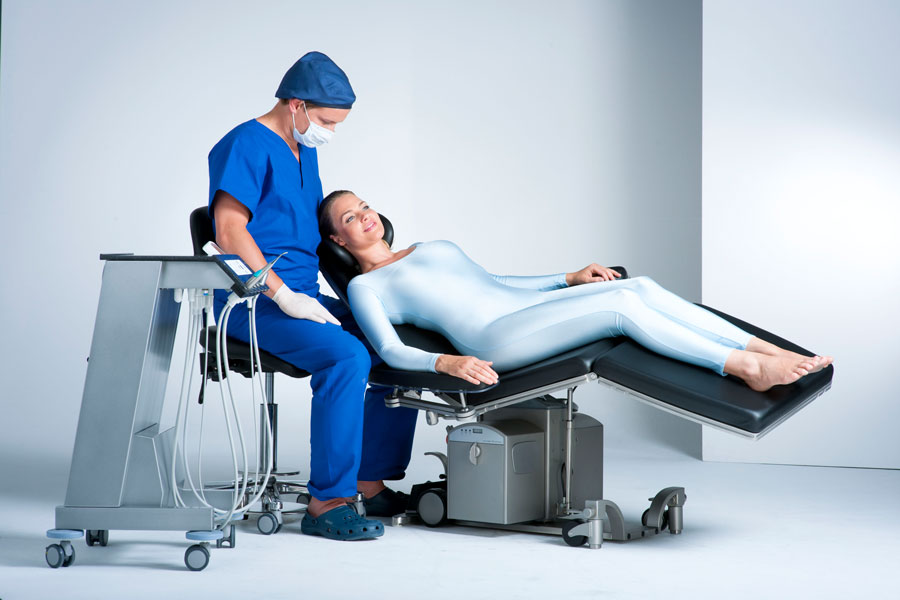
Upper Body Elevation and Sitting Position
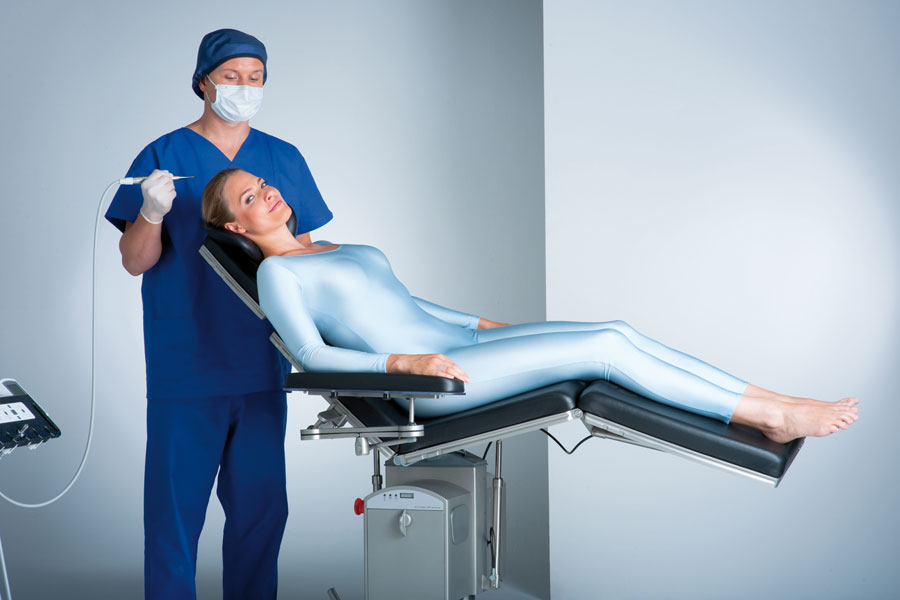
An elevation of the upper body in the OR is defined by the fact that the upper body angle is 30° or more above the level of the extremities. This leads to a caudal diaphragm shift (diaphragm low stand), which reduces the intrathoracic blood volume. This makes it easier to treat pulmonary, cardiac and cerebral diseases. The upper body elevation can also be differentiated into special positions that are based on the angle of the elevation of the upper body. These include in particular the deep Fowler position (15° to 30°), the semi-Fowler position (30° to 45°) and the high Fowler position (80° to 90°). The patient’s legs are either angled or stretched. These minimal changes in position work not only quickly and easily with an operating table from BRUMABA, but also almost silently.
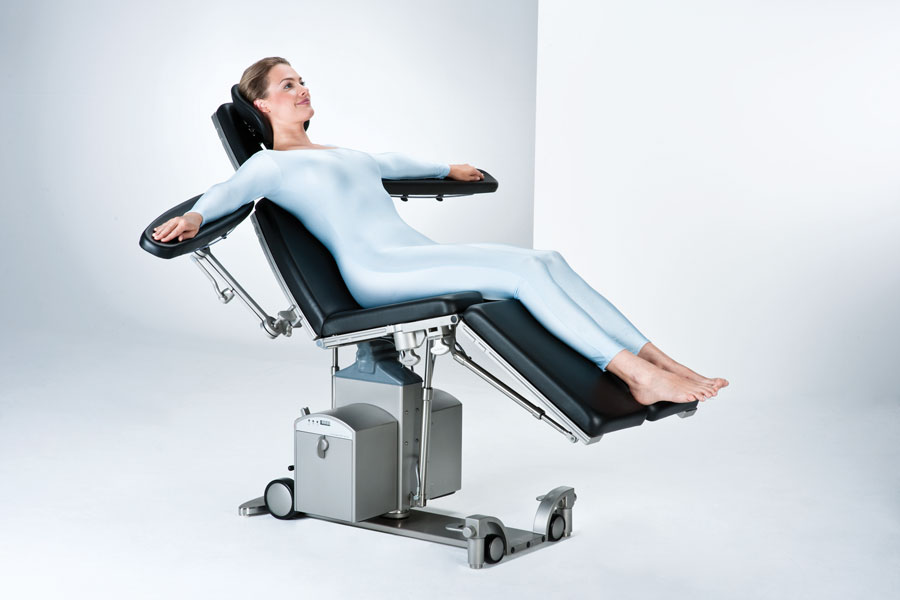
Beach chair position
This semi-seated position sounds a bit like vacation. With a BRUMABA operating table, this position can be designed ergonomically and comfortably for both the patient and the specialist staff. It is characterized by the fact that the patient can be treated with an upper body raised by 60°. This is particularly important in operations related to heart and lung diseases, as it leads to venous return to the heart.
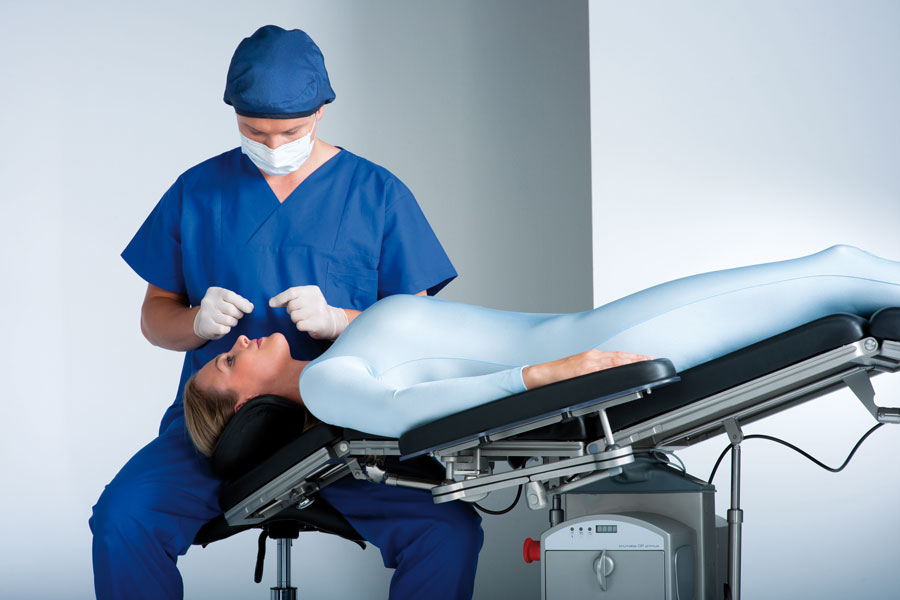
Maxillary and mandibular position
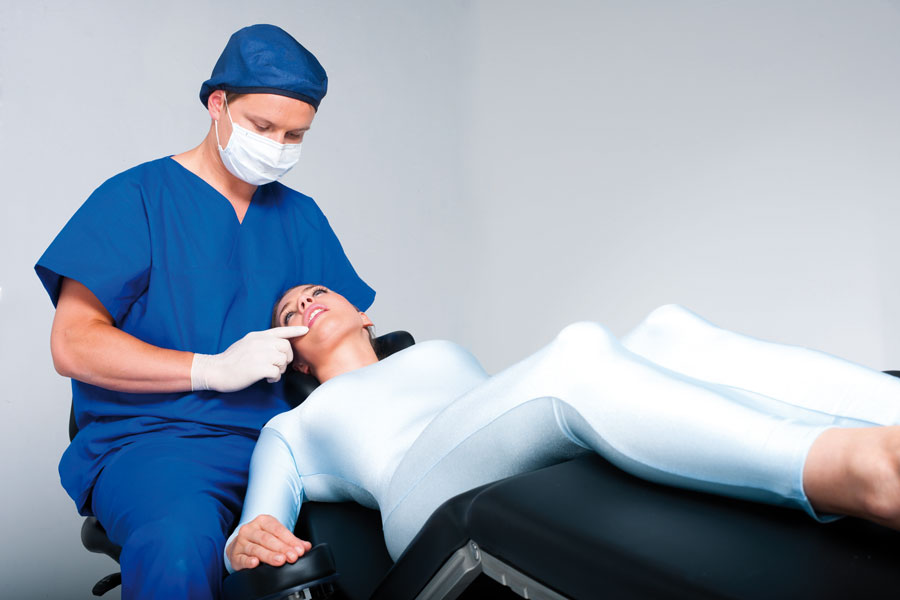
In dental and plastic procedures, it may be necessary to position the upper jaw and/or the lower jaw in a specific position. This is created by means of fine adjustment options in the head area, which are made easy with the 3-dimensionally adjustable head shell of the BRUMABA operating tables. In this way, you can even cover positioning options for operating tables that have a high specification.
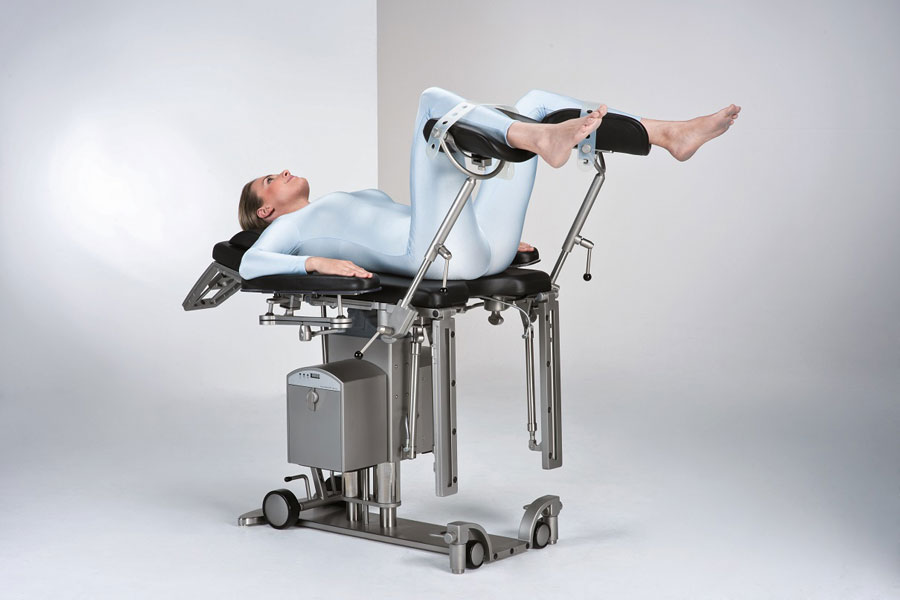
Lithotomy position
The lithotomy position is a medical position in which the patients are on their backs and the legs are bent by approx. 90° in the hip joint. In addition, there are strongly angled knees and a lower leg spread of approximately 50° to 60°. The term goes back to the removal of bladder stones, in which this positioning option was carried out in the OR – then as now. Gynecological and other urological and proctological procedures also use this position. With the operating tables from BRUMABA, you can treat patients weighing up to a maximum of 250 to 300 kg in this position.
Conclusion – Individual Requirements Meet Tailor-Made Answers
The optimal positioning techniques make the difference in the OR – both with regard to the patient’s well-being and the physical strain on the treating specialists. Based on this claim, BRUMABA has developed operating tables with positioning options that cover all aspects of operative work, from supine and prone positioning to alternating positions and lower and upper jaw positioning.
At the same time, the models from BRUMABA impress with unrestricted mobility, intuitive operability and modern technologies. Thanks to the height adjustment, surgeons can also choose to work standing or sitting. In this way, the complex work in the OR is managed by an equally complex device that provides comprehensive support in everyday surgical practice, in every situation.